Our Purpose
What We Do
We design crops that do more with less nitrogen.
Through advanced gene network engineering, we aim to:
- Reduce fertilizer requirements
- Lower greenhouse gas emissions
- Improve crop productivity under low-input conditions
Our goal is to enable sustainable bioenergy systems that are both economically viable and environmentally responsible.
Our Aims
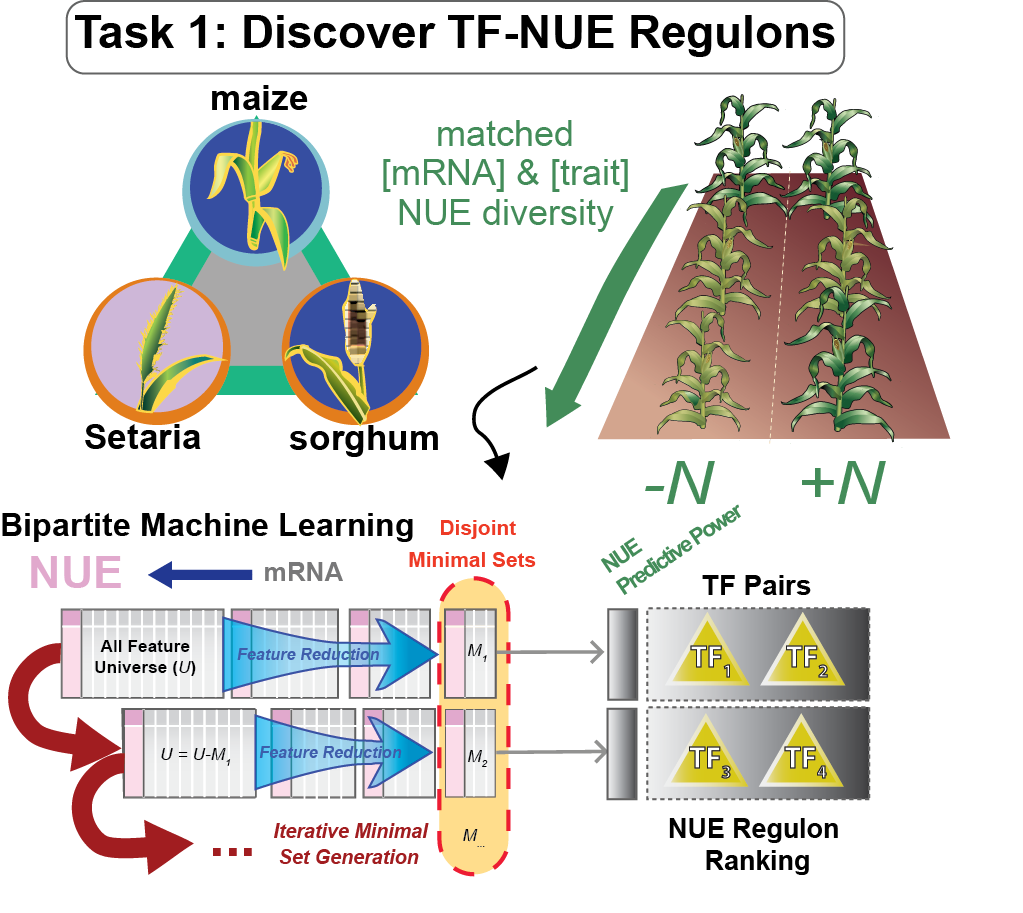
In Task 1, we will discover “Universal TF-NUE Regulons” by generating matched datasets of gene expression (RNA-Seq) and NUE traits from C4 plants sorghum and Setaria, which we will combine our existing matched datasets for maize and Arabidopsis (C3). Our ML analysis of these matched RNA-Seq and trait datasets using our new Bipartite ML method and network analysis will unveil the interactive role of TF pairs that regulate NUE genes-of-importance within C4 species and across C3-C4 evolution.
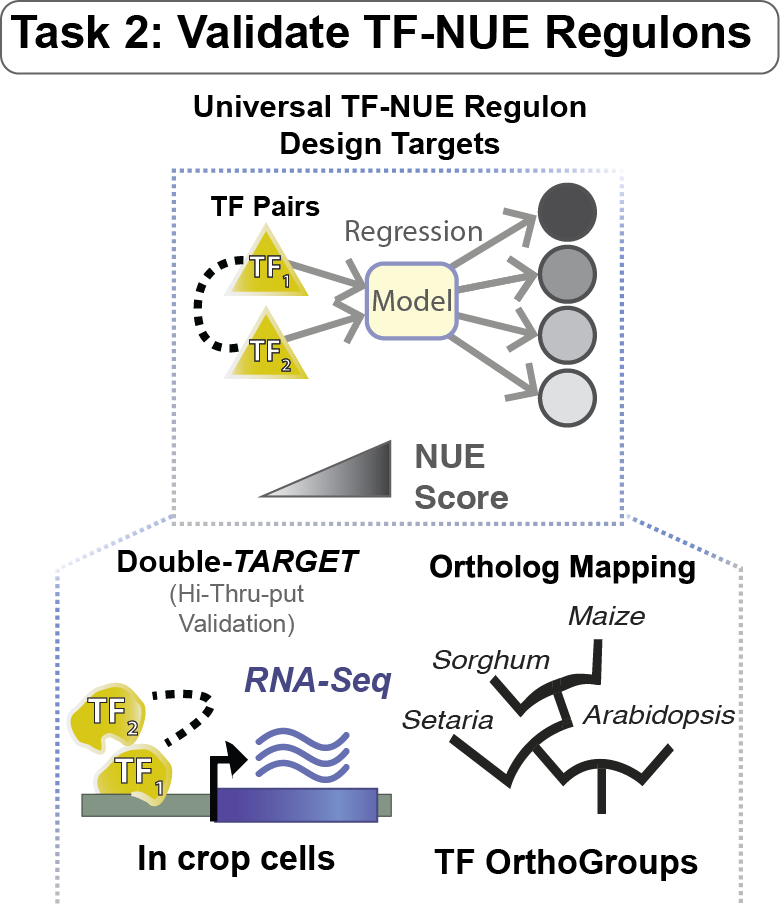
In Task 2, we will validate the gene targets of prioritized TF-NUE Regulons using a cell based transcription factor assay (TARGET). This will enable us to rank TF pairs that most specifically and significantly target genes-of-importance to NUE and prioritize TF pairs for in planta & field testing.
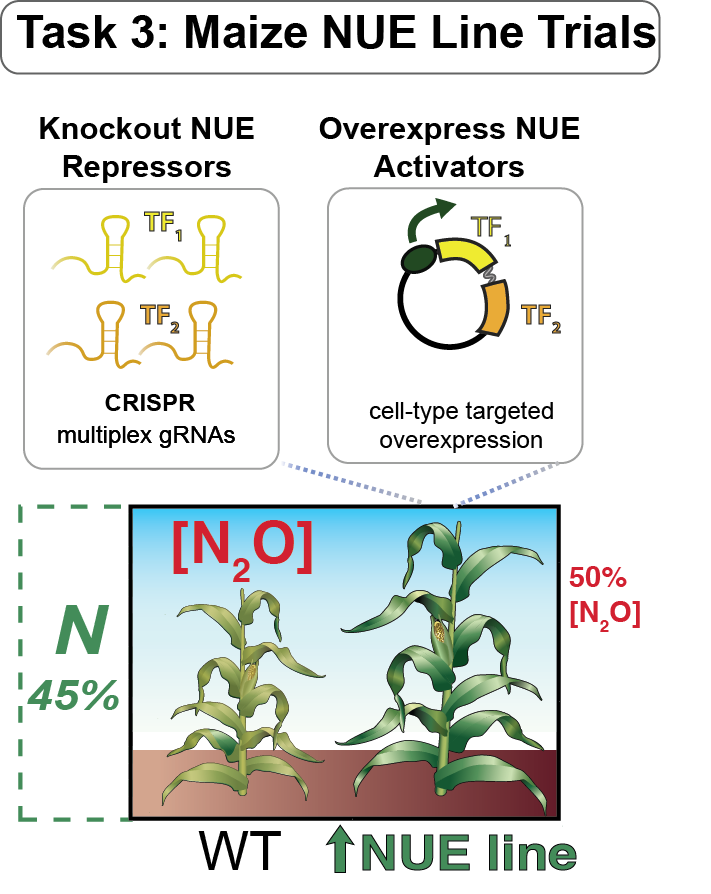
In Task 3, we will generate new maize varieties with increased NUE through targeted synthetic biology engineering of TF pairs expressed in relevant cell types. Through field trials where we measure N2O emissions, we will test if the engineered NUE lines achieve equal yield at 55% of the fertilizer input and reduced emissions.